We Should Probably Stop Watching Porn. I Think.
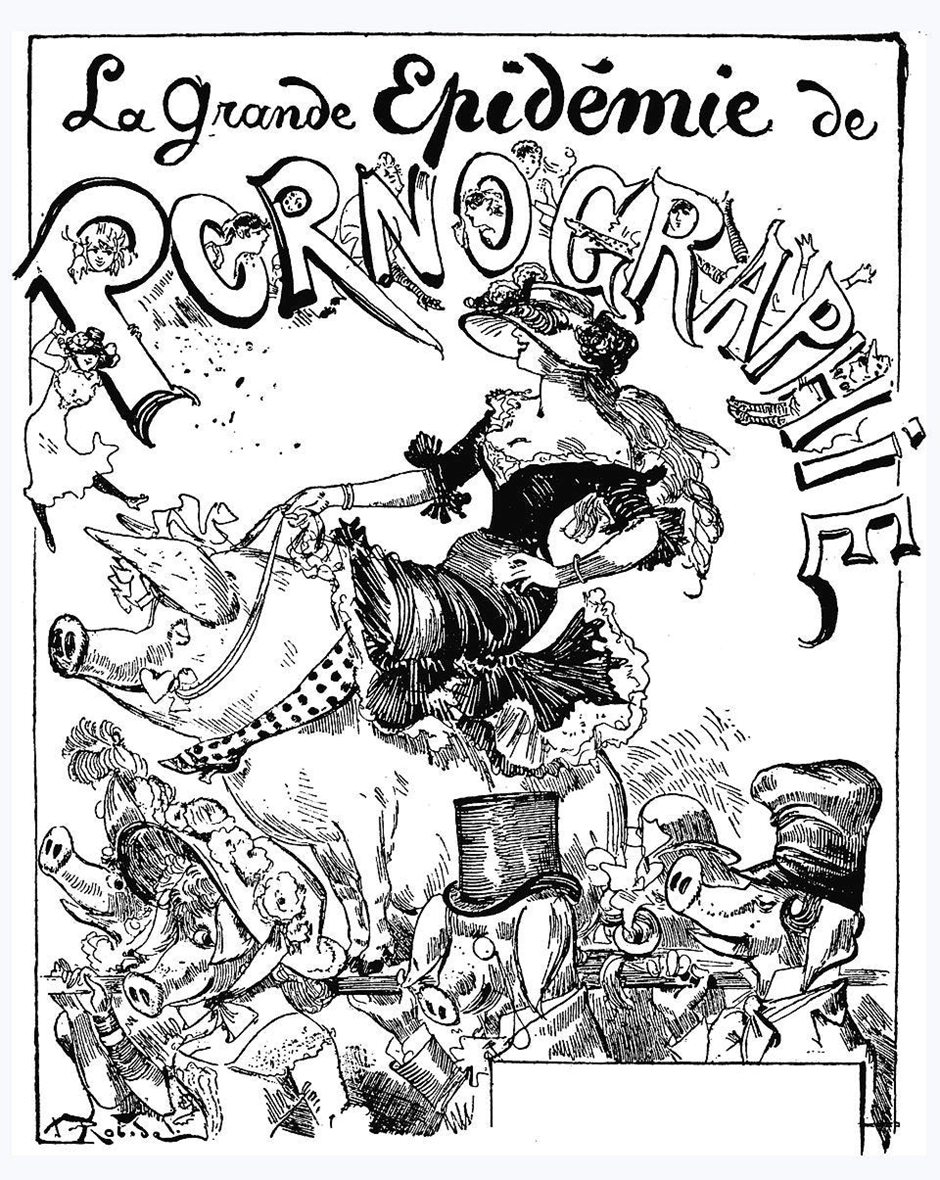
Epistemic status: moderately confident that heavy use is bad for a meaningful share of people and that the industry’s structure is exploitative; much less confident about the neuroscience, which rests on thin data. I try to flag which is which.
I.
The problem with how we talk about this
This essay is going to make some people uncomfortable. I’m not a pastor and this isn’t a sermon; the discomfort comes from the data on what pornography does, at scale, to real people, which is disturbing, and which we’ve collectively agreed, for reasons worth examining, not to discuss seriously.
The dynamic I’ve observed is this. Whenever someone raises concerns about pornography, they get sorted into a box immediately: religious prude, sex-negative, repressed. The conversation shuts down before it starts. The people raising concerns, often with peer-reviewed research behind them, get dismissed, while the burden of proof somehow never lands on the other side. That looks to me like an epistemics problem more than a values problem.
Consider how we handled alcohol. For a long time the conversation ran the same way: drinking is sinful, drinkers are weak, this is a moral failing. We made real progress only once we started asking what sustained alcohol exposure actually does to the brain’s reward circuitry. The moral framing generated heat, and the systems framing generated insight.
Pornography is in that same uncomfortable transition, I suppose. The conversation has been dominated by two unhelpful camps, religious conservatives who frame it as sin and libertarians who frame it as pure personal freedom, and both miss the more interesting question: what actually happens, mechanically, neurologically, and behaviourally, when hundreds of millions of people consume this content at industrial scale, produced by an industry with documented structural problems?
That’s the question I’m trying to work through, and I want to be upfront that I’m not fully confident in my conclusions. The evidence is strong in some places and ambiguous in others. But I think the overall picture is concerning enough to deserve engagement rather than dismissal.
II.
The best case for porn
The first argument is that bodily autonomy is not negotiable. If consenting adults choose to film themselves having sex and distribute that content, the baseline presumption should be that this is none of your business. We don’t ban coal mining because it’s dangerous, and we don’t ban alcohol because it causes addiction. The moment governments or social pressure campaigns get to decide which legal sexual expression is acceptable, we’re on extremely dangerous ground. Gay pornography was criminalized within living memory, and “harm” rhetoric has historically been turned against minority sexualities more than anyone else. Autonomy here is a hard-won principle, and I don’t want to treat it as a cop-out.
The second argument is that porn might actually reduce sexual violence, and it’s the one anti-porn advocates least want to engage with. The catharsis hypothesis holds that pornography provides an outlet for sexual urges that might otherwise turn into real-world aggression, and some cross-national data fits it. When Denmark liberalized pornography in the 1960s, Berl Kutchinsky found that reported sex offences fell and rape didn’t rise; when the Czech Republic did the same after 1989, rape didn’t rise and reported child sexual abuse fell (Diamond, Jozifkova & Weiss, 2011). If porn works as a pressure valve, restricting it has a body count. That’s a serious claim that deserves a serious response.
The third argument is that performers have agency and shouldn’t be treated as victims. Many performers say they chose their careers freely, find them meaningful, and deeply resent being cast as inherent victims by people who’ve never spoken to them. Treating every performer as coerced is its own form of dehumanization, stripping them of the very agency their critics say pornography denies women. Organizations like the Adult Performers Actors Guild argue the real answer is labour protections and de-stigmatization, and abolition would be the wrong fix. I think that’s a coherent position.
The fourth argument is that for many people, porn fills a real gap: LGBTQ+ people in repressive environments, people with disabilities exploring their sexuality, teenagers in countries with no sex education, and people in sexless marriages managing their own needs without harming anyone. For all of these groups, blanket condemnation causes real damage (isolation, shame, suppression) while offering nothing in return.
The fifth argument is that “porn addiction” isn’t even in the DSM-5. The American Psychiatric Association reviewed the evidence and declined to make hypersexual disorder, or pornography addiction, an official diagnosis. Sceptics like David Ley argue that “sex addiction” is a moral judgment dressed up as a diagnosis, and Joshua Grubbs and colleagues have found that much of people’s distress about their porn use is better explained by moral incongruence: people feel “addicted” largely because their use conflicts with their own beliefs about it. If that’s true, the neurological harm framework has a serious problem.
The first and third arguments in particular are ones I take seriously and won’t fully refute. What I’m going to argue is that even granting full autonomy to every performer, and even believing every performer’s consent is real, the downstream effects on viewers, on culture, and on the most structurally vulnerable people inside the industry are severe enough that the evidence-based position is that we should probably stop.
III.
Prostitution, the direct exchange of sexual services between individuals, has existed in virtually every human civilization for thousands of years. Whatever its social costs, and they’re real, it has coexisted with functional societies across very different cultures, legal systems, and moral codes. In Taleb’s terms, prostitution is Lindy.
Internet pornography is another matter. The version most people mean now (free, unlimited, high-definition, algorithmically optimized video, consumed alone by hundreds of millions of people a day) dates from the tube sites of the mid-2000s, so it’s about two decades old. We have no idea what its tail risks look like. We’re running an experiment on the reward systems of an entire generation, with no control group, no informed consent, and no exit strategy.
This is the distinction both camps keep missing. Sexual content as such is extremely Lindy: the Hohle Fels figurine, carved from mammoth ivory with anatomy that leaves little to the imagination, is at least 35,000 years old. What’s new is the delivery mechanism.
So the question is whether this specific mechanism (infinite, free, algorithmically escalating, and first encountered, on average, at about twelve) is something we should be confident about. By the Lindy standard we shouldn’t be. It’s too new for anyone to know.
When the downside is potentially severe, non-linear, and hard to reverse, I think the burden of proof should sit with the people claiming safety, and that principle applies to pornography with unusual clarity. If heavy use does change the brain, the changes may not be easy to undo, and normalized attitudes toward aggression are hard to unlearn. So the question I’d ask is less “can you prove porn is harmful?” than “can you show it’s safe?”
As far as I can tell, nobody can show that yet, and given the timescales involved, maybe nobody ever will.
IV.
What pornography actually teaches
Every medium has a grammar. Film teaches you to read a scene through camera angles, editing, and framing, and pornography has a grammar too.
Content analyses of mainstream pornography show consistent patterns. Fritz, Malic, Paul & Zhou (2020) coded about 4,000 heterosexual scenes from Pornhub and Xvideos. At least one act of physical aggression appeared in 45% of the Pornhub scenes and 35% of the Xvideos scenes. Women were the targets in 97% of the scenes with aggression, and their depicted response was neutral or positive almost every time (97% on Pornhub, 93% on Xvideos), and the aggressor was usually a man. These are two of the biggest sites in the world, so this is the mainstream, and it’s what the algorithm serves by default.
The grammar is that aggression is normal, and that women respond to it with pleasure or indifference.
Here’s a question worth thinking about. If you consumed any other medium carrying these messages (a film genre, a category of books, a video game) at the frequency and intensity that regular pornography consumers engage with this content, would you expect it to have zero effect on your attitudes? We take media effects seriously everywhere else: sports coverage shapes how we think about competition, and news framing shapes how we perceive risk. The idea that pornography, which engages the reward system more directly than most media, leaves attitudes untouched requires an extraordinarily selective theory of media effects.
The empirical record points the same way. Hald, Malamuth & Yuen (2010) found a significant positive association between pornography consumption and attitudes supporting violence against women (r = .18), stronger for violent pornography (r = .24) than for non-violent (r = .13), though both were significant. The effect isn’t uniform. Malamuth, Hald & Koss (2012) found the association concentrated among men already at relatively high risk, which fits Malamuth’s confluence model, and I’ll come back to that.
These studies are correlational, and directionality is hard to establish. Do objectifying attitudes drive pornography consumption, or does consumption drive objectifying attitudes? Probably both. “Probably both” doesn’t exonerate anything, though: a feedback loop in which harmful attitudes and harmful content reinforce each other is an escalating system.
The youth dimension makes this more urgent. In the absence of comprehensive sex education, pornography is the de facto sexual curriculum for a large share of adolescents. In a US panel of 10- to 15-year-olds, those who deliberately viewed violent X-rated material had almost six times the odds of reporting sexually aggressive behaviour (Ybarra et al., 2011), though the design can’t show which came first. In a survey of tenth-graders who had dated, boys exposed to violent pornography were two to three times as likely to report perpetrating sexual dating violence (Rostad et al., 2019). The content is the curriculum, and the curriculum is teaching something specific.
V.
“Porn addiction isn’t real”
It’s true that the DSM-5 doesn’t classify porn addiction. A classification decision doesn’t tell you whether the neurological effects are real, though; it reflects a committee’s judgment about diagnostic thresholds. And the World Health Organization went the other way: ICD-11, in effect since January 2022, includes compulsive sexual behaviour disorder, classified as an impulse-control disorder rather than an addiction.
In 2014, Kühn and Gallinat at the Max Planck Institute for Human Development scanned 64 healthy adult men with 3-Tesla MRI and found a significant negative association between hours of pornography per week and gray matter volume in the right caudate nucleus, a region central to reward processing and motivation. They also found weaker functional connectivity between the caudate and the left dorsolateral prefrontal cortex, a region involved in impulse control and decision-making. During a sexual cue-reactivity task, heavier consumers showed lower activation in the left putamen when shown sexual images, consistent with a downregulated reward response.
I need to pause here, because the paper itself explicitly acknowledges what it can’t resolve. The structural findings could reflect plasticity caused by intense stimulation of the reward system, or they could reflect a pre-existing neurological profile that makes pornography more rewarding in the first place. The study can’t distinguish these causal pathways.
Either interpretation, though, describes a problematic system. If pornography causes structural brain changes, that’s a direct harm. If pre-existing profiles make certain people especially vulnerable to escalating use, that’s a harm amplifier. Neither reading is reassuring.
As for the moral incongruence model, the idea that people feel “addicted” mainly because they feel guilty: it’s a legitimate hypothesis with real support, and it probably explains a good share of what gets labelled porn addiction. It can’t explain differences in gray matter volume, though. Guilt doesn’t show up on a voxel-based morphometry scan, and the structural findings exist whatever participants feel about their use.
My summary is this. “Porn addiction” as a clinical label remains contested, and the causal arrow in the neuroimaging data is unresolved. The neuroimaging evidence itself is thinner than I’d like: Kühn and Gallinat’s caudate finding comes from 64 men and hasn’t been directly replicated, and studies of people with compulsive sexual behaviour have found no striatal differences in some cases and increased, rather than blunted, reactivity to sexual cues in others. So I’d put it this way: there are suggestive associations between heavy use and differences in the reward system, and “we can’t call it an addiction yet” is a long way from “nothing is happening in the brain”. Collapsing those two claims isn’t a neutral act, and neither is overstating the first.
VI.
Does porn reduce violence?
The cross-national correlational data is real. Some countries that liberalized pornography saw rape rates stay flat or fall, and that finding shouldn’t be dismissed. But correlating national policy changes with rape statistics is an extraordinarily blunt instrument. It can’t account for simultaneous changes in reporting rates, policing, cultural attitudes, or dozens of other variables shifting over the same period.
When you move to individual-level studies, which at least measure who consumes what, the picture reverses. Wright, Tokunaga & Kraus (2016) meta-analyzed 22 studies of general-population samples from 7 countries, and pornography consumption was associated with actual acts of sexual aggression in both cross-sectional and longitudinal data. These are still correlational designs (the meta-analysis left out laboratory experiments), but they’re much closer to the question than national crime statistics.
Malamuth’s confluence model adds nuance. The relationship between pornography and sexual aggression is conditional: men who already hold hostile attitudes toward women show much stronger associations between consumption and aggression. For these men, pornography seems to amplify pressure instead of releasing it.
So the more precise statement is that pornography may work as a pressure valve for men with no pre-existing risk factors and as an accelerant for men who already have them, and there are a lot of those men. The safety-valve hypothesis assumes a uniform population, and the data says the population isn’t uniform. If you can’t tell which type you’re talking to, and you usually can’t, the aggregate bet isn’t obviously safe.
VII.
Who actually bears the risk?
Taleb’s core ethical insight is about symmetry: the people making decisions should bear their consequences. When the risk-takers and the reward-collectors are different people, you have a structural problem, which Taleb calls the “Bob Rubin trade”, after the Citigroup executive who collected more than $120 million in the decade before 2008 and faced no personal downside when the bank needed a taxpayer bailout.
The traditional pornography industry is a Bob Rubin trade.
Studio executives and platform owners at companies like Aylo (called MindGeek until 2023, and the parent company of Pornhub, Brazzers, and dozens of other brands) capture most of the economic value. Performers bear most of the risk: physical risk such as STI exposure and injury, reputational risk from permanent and searchable digital records, psychological risk, and economic risk from short careers, minimal residuals, and few options for moving into other work.
Performers have reported that insisting on a condom can cost them the job, and one content analysis of US films from 2005 and 2006 found condoms in 3% of heterosexual vaginal-sex scenes (Grudzen et al., 2009). When your ability to pay rent depends on accepting a specific physical risk, the word “consent” is doing a lot of heavy lifting. I’d call that economic coercion.
The clearest case is the Pornhub scandal documented by Nicholas Kristof in the New York Times in December 2020. Videos of child sexual abuse and non-consensually filmed assault had been hosted and monetized on the platform for years, while victims repeatedly asked for removal and were ignored. Within days of the column, Mastercard cut Pornhub off and Visa suspended payments, and Pornhub then removed roughly nine million unverified videos, more than half its library. It acted under financial pressure, and only after the fact. That’s a systemic accountability failure by the largest platform in the industry.
The asymmetry is staggering: platform executives collected revenue from this content and bore little of the harm, while performers and victims bore nearly all of it. That’s the precise structure Taleb identifies as ethically bankrupt, and it’s the default operating model of the largest companies in the industry.
VIII.
OnlyFans and the interesting structural question
This is where it gets complicated, and where I have to weaken my own case somewhat.
OnlyFans represents a structurally different model. Creators own their means of production, a camera and an internet connection. They set their own prices, decide their own content, keep direct relationships with their audience, and keep a much larger share of revenue (OnlyFans takes 20%) than studio performers ever did.
Aella, a sex worker and prominent rationalist blogger, makes an argument that’s hard to dismiss. In a 2022 interview with John Stossel, she compared her current work, which she chose, controls, and profits from directly, with the assembly-line job she took after leaving home at 17, and asked where the people worried about her exploitation had been when she was working in the factory. The framing in which sex work is uniquely degrading while factory labour is merely unfortunate relies on assumptions that deserve examination.
From a skin-in-the-game perspective, OnlyFans is structurally better than the studio model in several ways. The creator bears risk but also captures the reward. There’s no executive class extracting value while pushing the consequences onto someone else. The creator decides what to produce, when, and for whom. This is closer to the artisan model Taleb admires, someone with “soul in the game” who has a stake in the outcome of their own work.
The structural advantages of OnlyFans leave the demand-side concerns untouched, though, and this matters. Even if every creator on OnlyFans were operating with full autonomy, and many are, I suspect the aggregate effect on consumers could still be net negative. The content is still pornography, the same mechanisms still operate on viewers, and the Lindy concerns about an untested delivery mechanism still apply.
There’s also a question I don’t have a confident answer to. Does OnlyFans, by reducing exploitation on the supply side, make the demand-side problems worse by removing the most emotionally compelling argument against consumption? If the exploitation argument weakens, does consumption increase, and if it does, do the viewer-side harms scale with it? I don’t know. But it’s the kind of second-order effect that worries me.
IX.
What I think the evidence actually demands
Let me say what I’m not arguing. I’m not arguing for legal prohibition: prohibiting a vice tends to drive it underground and make conditions worse for the most vulnerable. Nor do I think every person who watches pornography is damaged or culpable, or that desire is shameful.
What I am arguing is that the evidence describes a system with asymmetric downside risk. The neurological associations with heavy use are suggestive, if thinly replicated. The association with sexual aggression shows up across countries and in longitudinal as well as cross-sectional studies. The traditional industry structurally undermines the consent it claims to operate on. And the content is free, ubiquitous, and increasingly the main sexual education for adolescents who have no framework to put it in context; in a Common Sense Media survey fielded in 2022, nearly three-quarters of American 13- to 17-year-olds had seen it.
I’m borrowing from Taleb here, with a caveat: his precautionary principle is meant for risks of systemic ruin, and pornography isn’t that. The weaker version I’d defend is that when a stimulus is new, enormous in scale, and hard to undo (possible changes to the reward system, normalized aggression, coercion laundered as consent), the burden of proof should sit with the people insisting there’s no problem.
I want to end with a note of uncertainty, because I think it’s warranted. I could be wrong about some of this. The causation question in the neuroimaging data isn’t resolved, and the neuroimaging itself needs replicating. The relationship between individual consumption and aggregate outcomes is complicated. The possibility that pornography provides net benefits for some populations (the catharsis hypothesis for low-risk individuals, sexual education in repressive contexts) is real, and I haven’t fully addressed it.
What I don’t think I’m wrong about is this. The current default, unlimited free access to algorithmically optimized content starting in early adolescence, produced by an industry with well-documented structural problems, consumed in quantities that would alarm us for any other stimulus this potent, is not a defensible status quo. It’s an accident of technology outpacing deliberation, and treating it as a settled question is incuriosity.
So, to the reader who sorted me into the religious-prude box back in Section I: I’m asking you to stop for reasons that have nothing to do with sin. The accounting of what it costs you, the performers, and the culture doesn’t obviously add up, and the answer to “is this safe?” is that we don’t know yet, which should worry you more than it does.
References
American Psychiatric Association. (2013). Diagnostic and Statistical Manual of Mental Disorders (5th ed.).
Conard, N. J. (2009). A female figurine from the basal Aurignacian of Hohle Fels Cave in southwestern Germany. Nature, 459, 248–252.
Diamond, M., Jozifkova, E., & Weiss, P. (2011). Pornography and sex crimes in the Czech Republic. Archives of Sexual Behavior, 40(5), 1037–1043.
Fritz, N., Malic, V., Paul, B., & Zhou, Y. (2020). A descriptive analysis of the types, targets, and relative frequency of aggression in mainstream pornography. Archives of Sexual Behavior, 49(8), 3041–3053.
Grubbs, J. B., Perry, S. L., Wilt, J. A., & Reid, R. C. (2019). Pornography problems due to moral incongruence: An integrative model with a systematic review and meta-analysis. Archives of Sexual Behavior, 48(2), 397–415.
Grudzen, C. R., Elliott, M. N., Kerndt, P. R., Schuster, M. A., Brook, R. H., & Gelberg, L. (2009). Condom use and high-risk sexual acts in adult films: A comparison of heterosexual and homosexual films. American Journal of Public Health, 99(S1), S152–S156.
Hald, G. M., Malamuth, N. M., & Yuen, C. (2010). Pornography and attitudes supporting violence against women: Revisiting the relationship in nonexperimental studies. Aggressive Behavior, 36(1), 14–20.
Kristof, N. (2020, December 4). The children of Pornhub. The New York Times.
Kühn, S., & Gallinat, J. (2014). Brain structure and functional connectivity associated with pornography consumption: The brain on porn. JAMA Psychiatry, 71(7), 827–834.
Kutchinsky, B. (1973). The effect of easy availability of pornography on the incidence of sex crimes: The Danish experience. Journal of Social Issues, 29(3), 163–181.
Ley, D., Prause, N., & Finn, P. (2014). The emperor has no clothes: A review of the “pornography addiction” model. Current Sexual Health Reports, 6(2), 94–105.
Malamuth, N. M., Addison, T., & Koss, M. (2000). Pornography and sexual aggression: Are there reliable effects and can we understand them? Annual Review of Sex Research, 11, 26–91.
Malamuth, N. M., Hald, G. M., & Koss, M. (2012). Pornography, individual differences in risk and men’s acceptance of violence against women in a representative sample. Sex Roles, 66(7–8), 427–439.
Robb, M. B., & Mann, S. (2023). Teens and Pornography. Common Sense Media.
Rostad, W. L., Gittins-Stone, D., Huntington, C., Rizzo, C. J., Pearlman, D., & Orchowski, L. (2019). The association between exposure to violent pornography and teen dating violence in grade 10 high school students. Archives of Sexual Behavior, 48(7), 2137–2147.
Stossel, J. (2022, September 14). Sex work. Creators Syndicate.
Taleb, N. N. (2012). Antifragile: Things That Gain from Disorder. Random House.
Taleb, N. N. (2018). Skin in the Game: Hidden Asymmetries in Daily Life. Random House.
Taleb, N. N., Read, R., Douady, R., Norman, J., & Bar-Yam, Y. (2014). The precautionary principle (with application to the genetic modification of organisms). arXiv:1410.5787.
World Health Organization. (2019). ICD-11, 6C72: Compulsive sexual behaviour disorder.
Wright, P. J., Tokunaga, R. S., & Kraus, A. (2016). A meta-analysis of pornography consumption and actual acts of sexual aggression in general population studies. Journal of Communication, 66(1), 183–205.
Ybarra, M. L., Mitchell, K. J., Hamburger, M., Diener-West, M., & Leaf, P. J. (2011). X-rated material and perpetration of sexually aggressive behavior among children and adolescents: Is there a link? Aggressive Behavior, 37(1), 1–18.