Noble Goals, Broken Vessels
Epistemic status: Sections II and III lean on well-studied economics. Section IV is speculation about AI from someone with no special access to the future, and its numbers will date quickly.
I.
Communism is right, in one specific sense.
Historically it’s a long list of famines, gulags, and economies that flatlined, and I’m not defending any of that. I mean the moral intuition. “From each according to his ability, to each according to his needs” is, if you read it slowly and without the weight of the twentieth century on your shoulders, one of the saner sentences anyone has written. It describes a world where the lottery of your birth doesn’t decide whether you eat, and where basic needs aren’t a prize you have to win.
I know the reflex here: Venezuela, Cambodia, bread lines in Moscow. Hold that thought, because I’m going to use it in a second, though probably in a way you don’t expect. My claim is narrower and harder to wave away: the goal was fine, and the problem was always us.
II.
Start with the best case for central planning, because it deserves one. To its sympathizers, markets are wasteful. They produce ten brands of toothpaste while someone somewhere has no teeth left to brush. They’re blind to externalities, they under-provide public goods, and they systematically reward capital over labour. If we really had a full picture of who needs what, leaving it to the accidental tug of war of prices instead of coordinating on purpose would be close to morally indefensible. In this framing, planning is the adults finally sitting down to clean up the mess.
That’s a good argument, and a serious one. It breaks at two distinct points, though, and this essay depends on keeping them apart.
The first break is epistemic. Hayek called it the knowledge problem in his 1945 paper “The Use of Knowledge in Society”, and the cleanest part of his claim has nothing ideological about it: the information needed to run an economy doesn’t sit in one place. It’s scattered across millions of heads in local, tacit form. Think of the welder who knows which machine is about to fail next week, or the shopkeeper who notices her customers drifting to a competitor before any statistic could. That knowledge can’t be shipped upward as a report, because most of it can’t even be put into words by the person who holds it.
This is where the Moscow bread line earns its keep, as data instead of a slogan. Vladimir Popov, summarizing the growth-accounting literature on the Soviet economy, puts total factor productivity growth at about 0.6% a year in the 1930s, rising to about 2.8% in the 1950s, then falling decade by decade until it turned negative in the 1980s. Robert Allen’s estimates are less dramatic (roughly 1.5% to 1.7% a year until 1970), but they agree on the ending: productivity growth hit zero in the early 1970s and went negative after that. The Soviet economy grew the way you grow when you’re pouring in more inputs, which economists call extensive growth, and it stalled once growth required squeezing more output from the same inputs through better allocation and faster innovation.
Popov’s own explanation is specific: planners chasing output targets kept building new capacity instead of replacing ageing capital, until the ageing capital caught up with them. I read that as a close cousin of the knowledge problem, a system run from the top that kept optimizing the numbers the top could see, though Popov might not put it that way.
The second break is moral, and it’s the one I care about more. To run central planning you have to put very large power in the hands of a small number of people, and the pattern there, across cultures, ideologies, and centuries, is too consistent to be bad luck: power of that size almost always ends up used in the interest of whoever holds it. No special wickedness is required of communists for this to happen. Humans are humans, and central planning hands a group of them a lever that’s much too big.
Both objections are empirical rather than appeals to nature (“centralization is unnatural, therefore wrong” would be a lazy argument): centralization runs against the mechanisms that make complex systems work in practice. Look at anything intricate and robust, like ecosystems, immune systems, or evolution itself. None of them has a central controller. They’re bottom-up and redundant, driven by tight feedback loops and absurd amounts of variation, and that’s where their robustness comes from. Taleb’s word for systems like these is antifragile: they get stronger from exactly the small shocks a central controller would try to suppress.
III.
So if the goal is noble but the operators can’t be trusted, where does that leave you?
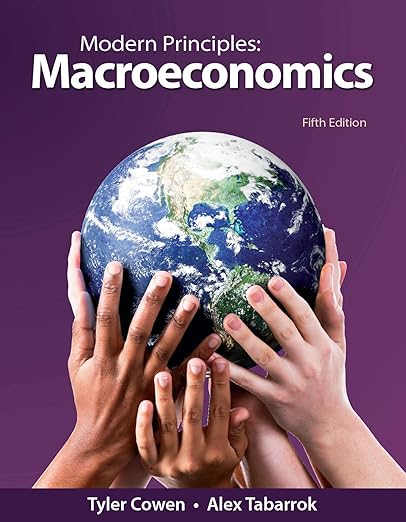
It leaves me with something Tyler Cowen named in a January 2020 blog post: state capacity libertarianism. Nobody prints banners for a second-best position, but that’s where I am, so let me say what it is.
Cowen laid it out as a list of propositions, and my argument rests on the first two: markets and capitalism are very powerful, so give them their due, and strong states remain necessary to maintain and extend them. What I take from that (this part is my gloss rather than Cowen’s) is a division of labour. The state provides what markets can’t: rule of law that actually functions, contracts that actually get enforced, infrastructure, and basic research that no private actor will fund because the payoff is too diffuse and too far away. Allocation, meaning who gets how much toothpaste, is left to decentralized markets. Markets get that job because they fit the shape of the human brain, and I don’t think they deserve any more reverence than that. We evolved to make local decisions from information directly in front of us, and we didn’t evolve to execute instructions from an enormous entity we’ll never meet.
The strongest objection to my position that I know of comes from Vincent Geloso and Alexander Salter. They ask why history has no societies with weak states and rich economies, and their answer is predation: a society that gets rich without a strong state invites plunder from neighbours that have one, so it doesn’t survive long enough to show up in the data. On their reading, state capacity is a condition for surviving prosperity more than a cause of it, and the correlation people like me lean on is partly a filter.
I think that critique is real and only partly answerable. My defence is much narrower than “strong states produce good outcomes”. A weak state can’t even attempt the enabling functions, while a strong one at least can, and from there the whole game becomes constraining that strength. Geloso and Salter give me one more reason to want a capable state, too, since on their account a rich society without one gets eaten. Good institutions are distrust frozen into rules. That’s engineering, the same way a seatbelt isn’t an accusation that you intend to crash.
IV.
Everything so far assumes that humans are the ones in charge. Pull that assumption out and the whole argument shifts.
Strip Hayek down and the epistemic half of his case is a claim about computation and information aggregation: knowledge is dispersed, no processor is large enough to hold it, and the feedback loops are too slow. Those are statements about a limit, and limits move. Imagine an AGI, in particular one that grows into what Nick Bostrom calls a singleton, a world order with a single decision-making agency at the top. Such a thing could, in principle, absorb distributed information in close to real time, close the feedback loops that stayed broken in every centralized system of the last century, and correct itself faster than any market. The socialist calculation debate, which most economists think Hayek won, would reopen. Remove the computational constraint and the epistemic half of the case against communism starts to evaporate, though I suspect the tacit part, the welder’s hunch that he couldn’t put into words for anyone, would be the last piece to go. The moral half is untouched, and I’ll come back to it.
This isn’t idle speculation, because the relevant variable is moving fast. Epoch AI’s data show the training compute of notable AI models growing about four to five times a year since 2010, which works out to a doubling roughly every six months. I don’t know of any other technology whose key input is on a curve like that. For the first time in history, the constraint Hayek identified is the thing improving fastest.
So the noble goal might finally find a vessel without cracks. That’s the strong case, and I don’t want to knock it over too quickly. But some of the cracks go deeper than compute.
The first is that preference aggregation is a different problem from computation. Even a singleton that knows exactly who needs what still has to decide what to optimize, and human wants are heterogeneous, mutually contradictory, and unstable over time. That comes with having eight billion people who want different things, and it gets no easier when the planner is superhuman. It arguably gets worse, because now the objective function is being chosen by something even fewer people control.
The second crack is the deep one, and it’s the moral half coming back. AGI doesn’t fall from the sky; it’s built, trained, and aligned by humans. If my premise from the start was that I don’t trust humans holding a lever that’s too big, then a singleton is the largest lever in history, handed to humans at the most fragile moment. The empirical picture isn’t reassuring. Epoch AI estimates that the United States holds about three-quarters of the world’s AI supercomputer performance, with China second at about 15%. The largest known system in early 2025, xAI’s Colossus, ran on 200,000 AI chips with about $7 billion of hardware, and Epoch projects that if trends hold, the leading system in 2030 will need about two million chips and $200 billion. OpenAI’s revenue, meanwhile, has been roughly tripling every year. That’s the profile of an asset concentrating into very few hands, very fast, and it looks nothing like a neutral utility emerging from global consensus.
You can tell me alignment research is open and consensus-based and will therefore turn out fine. I hope so. But “open” isn’t the same as “agreed”, and the alignment community doesn’t agree on the approach. Even a technically solved alignment problem would leave the question I care about most: aligned to whose values, and for whose benefit?
So if I’m forecasting instead of hoping, the future most likely doesn’t look like a planned utopia. I see three main possibilities.
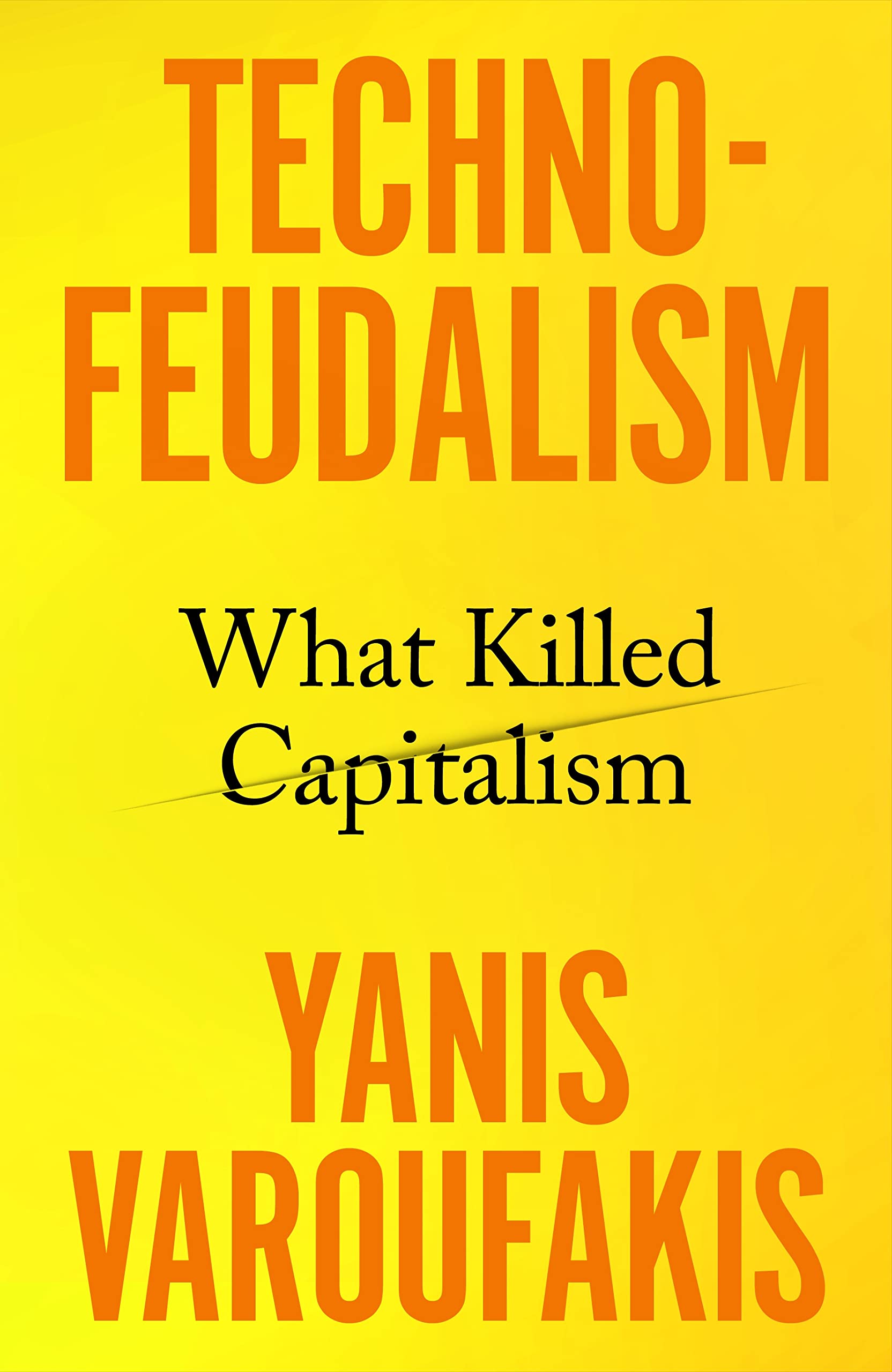
The most probable, I think, is techno-feudalism: the first AGI captured by a handful of firms, with Yanis Varoufakis roughly right that we’ve already become serfs working land owned by cloud lords, paying rent in data and attention instead of grain.
The most dangerous is two rival superintelligent systems aligned to incompatible values, splitting the world with leverage that makes nuclear weapons look tame.
The most underrated is no dramatic moment at all. AGI seeps into markets, bureaucracy, and the military until humans still nominally lead while the decisions that matter have quietly stopped being ours. Jan Kulveit and colleagues have a paper on this scenario under the name gradual disempowerment.
And the bitter irony is the engine of the whole essay: precisely because I don’t trust humans, I expect the transition to be used to concentrate power, and I don’t expect it to be used to distribute it.
V.
I think communism’s goal is noble, and I think humans can’t reach it without breaking it on the way. So as long as humans lead, state capacity libertarianism is the best answer I have, because it prices in who we actually are instead of who we wish we were.
When AGI arrives, I suspect the categories “state”, “market”, and “planning” stop applying in the shape we know them. Maybe the goal finally finds its vessel. More likely, the vessel ends up in the same hands I distrusted from the beginning, and nothing changes except the scale, which is the worst possible thing to change about it.
This might read as nihilism, and I think it’s close to the opposite. Distrust of humans is the precondition for building anything worth having. We design robust institutions because we know the people inside them are fragile, ourselves very much included, especially on the day it happens to be us holding the lever.
So, is communism right? In the sense I meant at the start, I still think so: the sentence about ability and needs is one of the saner things anyone has written. My distrust is reserved for anyone, human or otherwise, who offers to carry it out on our behalf. The vessel is cracked, and I think the job is to admit that and pour carefully anyway.